
Looking good isn’t vanity. It’s leverage.
Even in B2B. Even in regulated categories. The work should still be good.
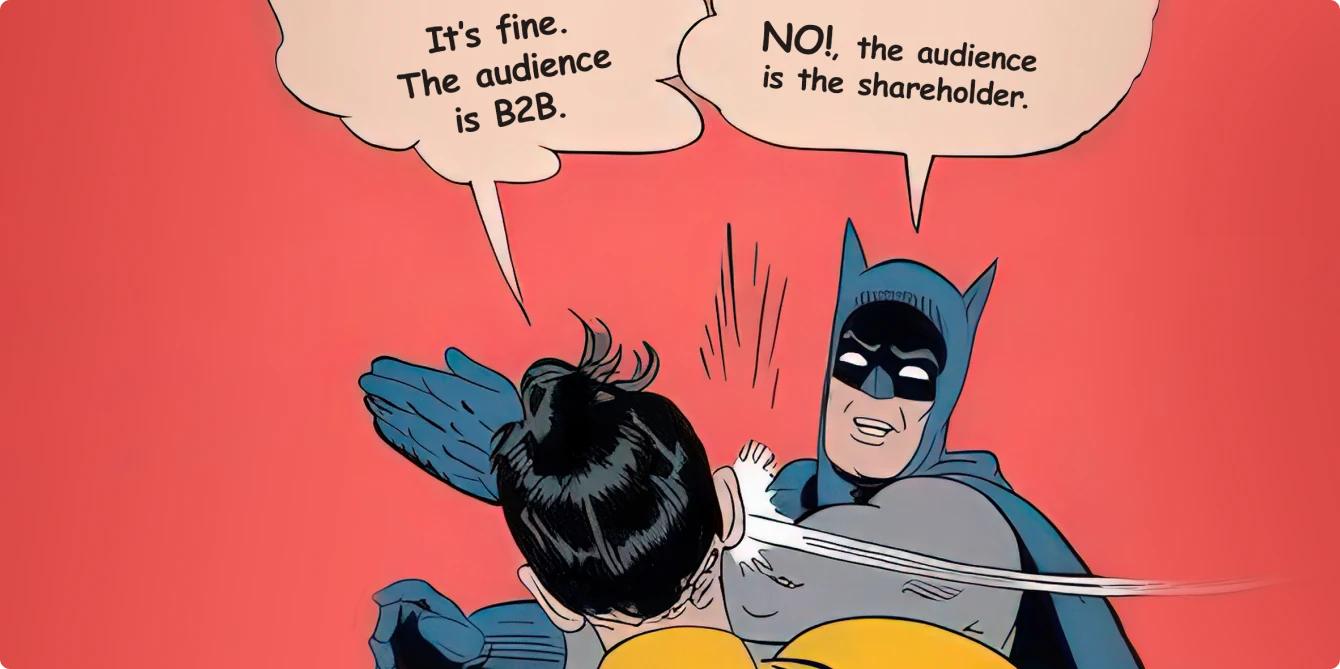
There’s a quiet assumption running underneath a lot of corporate marketing. The assumption is that the work doesn’t have to be that good.
Nobody says it out loud. The assumption arrives wearing better clothes. The audience is internal. The buyer already knows us. We’re regulated, so we can’t really push it. The category is mature. The audience is sophisticated, which has somehow become a euphemism for “will not notice or care.” In every case, the standard slips a notch, the brief gets written one rung lower than it should be, and somewhere across the organization the bar settles at a level nobody quite chose but nobody is going to be the one to fight about.
The bar isn’t actually lower. The bar just used to be invisible.
The procurement officer at the manufacturing firm. The CFO at the regional hospital network. The operations director at the logistics company you’d like to sell into. These people watch the same shows you do. They scroll the same feeds. They absorb the same consumer advertising every other person with a phone and a commute is absorbing. Their eye is calibrated, whether they have the vocabulary for it or not, to the same standard.
So when they sit down with a deck made to a 2014 standard, with stock photography you can name on sight, typography from a template, a headline approved by committee, they notice. They may not name it. They almost certainly won’t put it in the meeting notes. But something happens, somewhere just below the conscious threshold, and the credibility of everything that follows takes a small, silent hit. The product gets a little more boring. The price gets a little less defensible. The conversation gets a little harder.
That’s the leverage point. Not a logo refresh. Not a fresh coat of paint. The consistent signal across every surface that this is a company that operates at a higher standard than it strictly has to.
Commercial quality used to mean a Super Bowl spot. Today it means the photography on the careers page. The typography in the deck. The pacing of the case study film, the sound design on a thirty-second product launch.
A thousand small decisions, made by people who care, noticeable in their presence and considerably more noticeable in their absence.
So why isn’t more corporate work clearing that bar? It’s a matter of depth vs. breadth.
Corporate marketing teams are the only people in the room who know things that take years to learn and can’t be briefed in. The regulatory edges. The legal review process and the specific lawyer in it whose objections actually matter. The internal politics of which executive cares about which initiative. The buried history of why the last campaign got watered down two weeks before launch.
That’s depth. It’s real, it isn’t replicable, and it’s the reason any of this works at all. What internal teams structurally can’t have is breadth.
Breadth is what gets accumulated by working across categories. Doing a luxury hospitality launch one quarter and a consumer health rebrand the next. Shooting a hero film for a wellness brand on Tuesday and laying out a print campaign for an industrial client on Thursday. The reference set you build doing that work is qualitatively different from the reference set you build going deep on one business for ten years. You see what’s working in categories that aren’t yours yet.
Hire a vendor for the next project and they show up cold. They learn just enough to deliver against the brief and then they’re gone, and the institutional knowledge they almost-but-not-quite built leaves with them. The work is fine, but fleeting.
Add headcount and you scale the depth you already have, which is the wrong axis. You get more capacity for work that already looks like the work you’ve been doing. The reference set doesn’t get sharper. It gets reinforced.
The model that does work is an embedded team. Outside the company, but woven into it. People who learn the business at institutional depth over time. Who sit in on the standing meetings. Who know which executive responds to data and which one responds to a story. Who can be trusted with the politically sensitive briefs because they’ve been in the room long enough to read it correctly. And who, because they’re also working with other clients in other categories, are constantly bringing back a sharper, more current reference set than any internal team can build by itself.
Internal team brings depth. Embedded partner brings breadth.
The work happens in the overlap, and the overlap is most of the difference between corporate creative that’s fine and corporate creative the buyer in the room actually sits up and pays attention to.
Looking good isn’t vanity. In a market where every set of eyes has been trained by the best work in the world whether they wanted to be or not, it’s one of the few advantages still available to a corporate brand willing to take the creative work seriously.