
Small bites. Massive impact.
Most marketing budgets are spent on outputs. The smart money is spent on inputs.
Most marketing budgets are spent on outputs. Campaigns. Content. Ads. The work that’s seen, measured, and reported on. The work that justifies the line item.
The smart money is spent on inputs. The systems and assets that make every output better, cheaper, and faster. The brand foundation that produces a thousand downstream decisions. The content library that feeds a year of social. The photographic register that holds across every surface that uses photography. The deck template that improves every sales conversation for as long as it ships.
Inputs aren’t sexy. They don’t have a launch date. Nobody puts the brand system on a media buy. But they’re where the leverage actually lives.
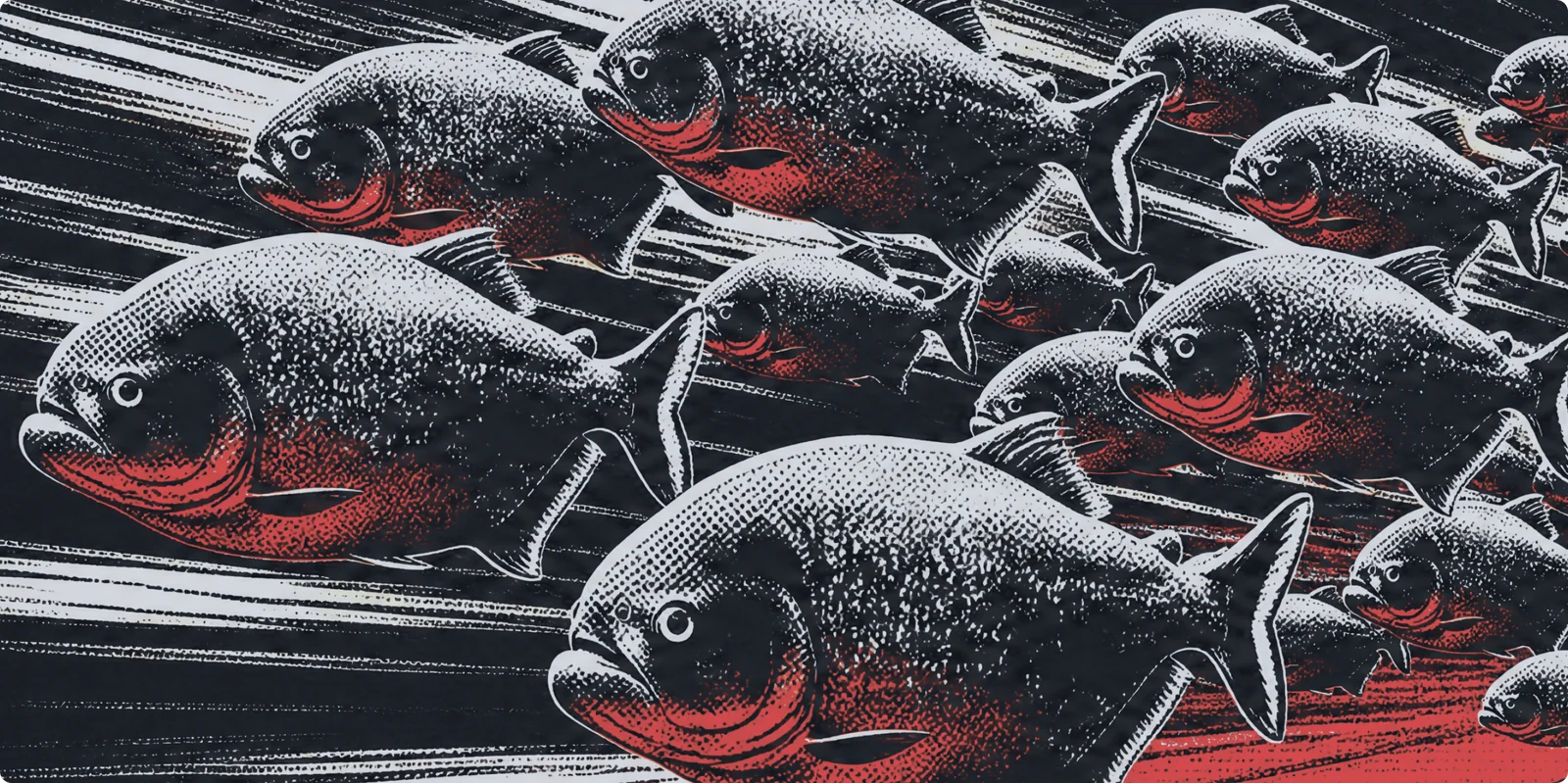
Each bite small enough to be cheap. Each bite sharp enough to draw blood. Together they take down something much larger than any single bite could.
The point isn’t budget size. It’s where the budget lands.
Saint Laurent’s physical activations aren’t events. They’re the engine of global distribution. A single activation in a single city produces editorial coverage, social content, brand films, and a year of distribution that flows from a tightly produced moment. The one activation looks like a campaign. The math is closer to infrastructure. Many quarters of yield.
Life Time’s club opening photo shoots aren’t one-off productions. They’re a system. Every new club gets the same approach — a tightly defined shoot framework that produces a content library spanning launch creative, social, member communications, in-club displays, and digital programming. One production. Years of distribution across every channel.
Skanska’s global rebrand happened at the corporate level. The North America Building Construction business needed to make it operational — translating the global standard into the assets, films, and brand infrastructure that the US business unit needed to actually deploy it. One production cycle. Ongoing brand utility for the business unit that had to live with it.
None of those were small in absolute terms. But each one was aimed at the input layer rather than the output layer. The work keeps working. The spend keeps earning.
Most agency engagements are sold the opposite way. The pitch is the campaign. The deliverable is the campaign. The next conversation, three months later, is about the next campaign. Activity without accumulation. Spend without yield.
The question isn’t how much to spend. It’s where to spend so the spend keeps working when you stop.
That’s where the work lives. Small bites. Massive impact.